The Importance of Place
Do you know where you are?

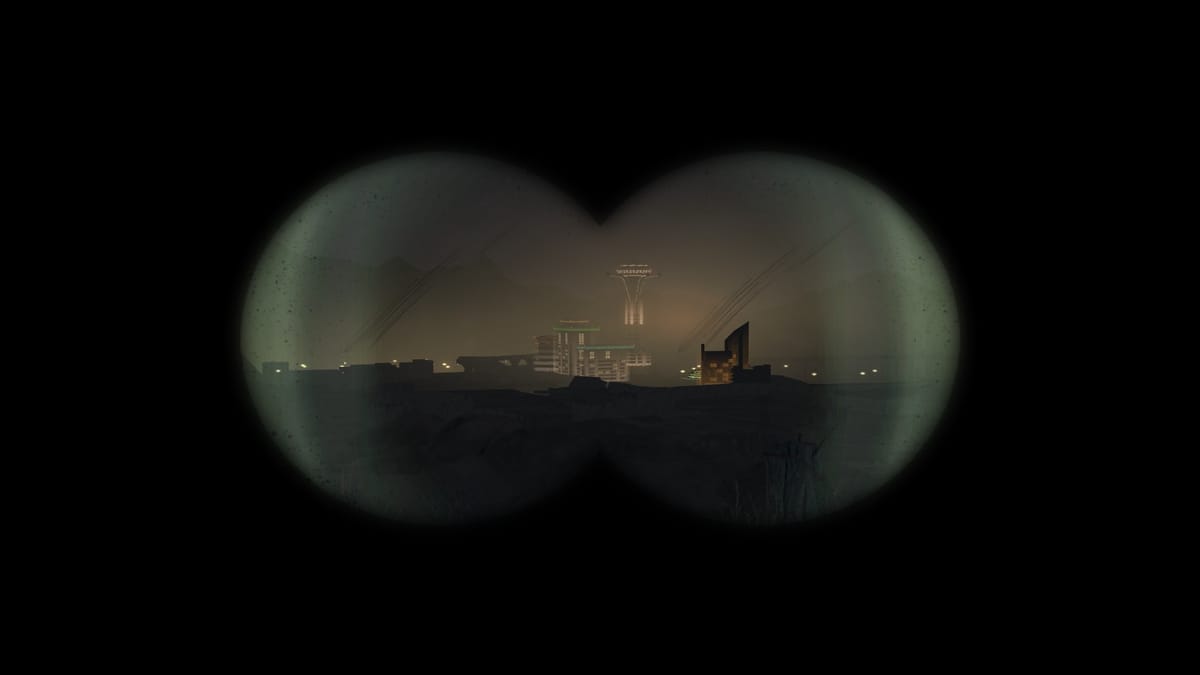
The only thing that matters is knowing where you are. Anything worth anything is grounded in a location, in a time, or in something else concrete and consistent. The most compelling works of fiction are compelling for their worlds, whether due to some distillation of intangible truths or the ways that a fictional world’s alien features reflect back onto our own reality. Every truly great work of fiction is made up of realized places, places which stretch beyond the bounds of the page or screen, filling what we are allowed to see with deeper meaning and resonance. When game critics speak of “immersion”, this is often what is being sought. A sense that the world a player character inhabits exists beyond the bounds of the player’s perception. Most truly great films set themselves in a specific moment and either dive wholly into the crevasses of that moment or twist and change choice aspects to draw emphasis and highlight whatever the authors wish to explicate. This sense of a tangible history to a location is what enriches and empowers the connections we make to a work to transcendent heights.
One great example of the importance of place can be seen in some contrasts between video game RPGs. The all-time greats like Fallout: New Vegas and Disco Elysium are situated in richly imagined and fleshed out worlds, while unfortunate misfires like Fallout 4, Fallout 3, The Witcher 3: Wild Hunt, and Cyberpunk 2077 all fail to create worlds that exist beyond the player, depriving their frequently inspired world designs of the presentation they deserve. Disco Elysium is one of the most stunningly deft examples of the importance of a strong setting that I have seen in fiction. Its fictional histories grounded in the real histories of revolution and failure provide a beautifully realized backdrop for its story to rhyme and echo the real world. While the Estonian roots of the game place it firmly in the histories of the former Soviet Union, the strength of its world allows it to resonate beyond the specificity of those cultural memories. The CD Projekt Red games Witcher 3 and Cyberpunk 2077 both primarily fail to curate a sense of place through their frequent failures to convince the player that the world moves without them. Cyberpunk 2077 commits the straightforward mistake of tying the game’s main quest to a time-sensitive event, the timing of which does not hold up at all under the careful scrutiny of… playing the game. The Witcher 3 meets its main failure at the conceptual level, trying to build an RPG around what is anything but “role-playing”, as Geralt is a fully-formed character with a fully-formed storyline that, while compelling and well-written, comes nowhere close to the level of interactivity that the game continually pretends it is capable of.
This is not to say that a fictional world is better for simply being more complete or more fleshed out. This sense of place can frequently be injured by filling in every little corner of a world, as no fictional world can possibly hold up to infinite scrutiny. The history of our real world is magical and infinite because it has been shaped by incomprehensible numbers of minds and hands, and no fictional world can ever approximate that breadth or richness. Part of what makes the “places” of fiction so fascinating is the choices that their authors must make about what to focus on and what to leave out. An alt-history nuclear wasteland of the Washington, D.C. area which either ignores or mishandles the real histories of slavery in the area is that much more inadequate and frustrating as a setting, revealing its limitations and the overambitious scope of its concept. The fandom-brained approach of trying to fill in every corner of a universe with stories and facts can sometimes lead to magic, though the sheer volume of stories will also produce great quantities of lesser ideas. Star Wars pre-Disney provides many great examples of this, with things like Timothy Zahn’s books or even George Lucas’s own prequels contributing to the varied tapestry that made up the series’ world for decades. Disney’s Star Wars is a far less exciting place, attempting to homogenize and sanitize every corner of the fictional galaxy, just as a fictional evil megacorporation may try to do to some alien planet. The magic of Star Wars now exists in spite of the corporatization of its world, residing only in the corners and cracks where real artistry and genuine ideas are allowed to blossom.
A work of fiction which grounds itself in something allows itself to fly. As with everything, there is a balance, and no prescriptive fix-all can ever really be offered; but it remains true that the works which contain richly imagined and consistently impressive worlds are those which stay with us the longest. At the surface level, a world which can be imagined and which can effectively suspend disbelief, is necessary for the enjoyment of fiction. At a deeper level, the tangibility of a fictional world defines its limits in conversation with our own world, determining if it will exist in a limited pocket of its own imagination, or be capable of spreading its wings to connect to things which were never considered by the author or artist. Well-researched and presented history in real life is a constantly enriching and empowering tool for a better understanding of every part of our world, and fictional histories can provide similar tools in their rhythms and rhymes.
P.S. I have played like 25 hours of New Vegas in the past week I am nocturnal now help me it’s so good.