Movies Are More Real Than Reality
A manifesto of sorts
For as long as we have made art, we have chased after the realities we fabricate in our lives. We used to see a painting or read a book and try to emulate the feelings and sensations that we thought it conveyed, constantly forgetting or actively ignoring the nature of art. No work of art can encompass the entirety of human existence. Every work picks and chooses which slices and angles to divulge to its audience, allowing that audience to then let themselves believe that the omissions do not exist. Watching a movie that portrays a constantly harmonious and happy friend group lets you believe that one in real life could truly consist of only the engaging highlights which a movie would reasonably show. For centuries, we have willfully ignored the necessary limitations and horizons of art in our messy pursuits of all which makes life worth living. In my movie-watching, I have often found myself returning to the refrain: “movies are more real than reality.” This phrase is not meant to imply some anti-materialist solipsism, but to attempt some understanding of the ways in which humans, as a collective, engage with art.
I ask the reader to ponder, for a moment, what some of their current goals and aspirations are. Narrow that to interpersonal goals of friendships and romance, and think about what reference points you have for those goals. Chances are they come from works of art. This is of course because over our eons of existence, the best way we have found to understand each other and communicate the incommunicable is art. For thousands of years, I would imagine that these goals and aspirations frequently came from stories, from books, from myths. The power of art to focus on specific aspects of the human condition and allow us to forget about the knotty messiness for a moment, or to feel that others understand the messiness and knots, positions it magnificently to act as a guide and pattern for our lives. Artists seem to have everything figured out, because how else would they have communicated it so eloquently? Never mind that art is full of lies, full of sleight of hand, full of obfuscation. Sometimes we choose to ignore those truths, sometimes we do not remember they exist. The past century of development, in art and society, has irrevocably changed the ways these truths interact with our lives.
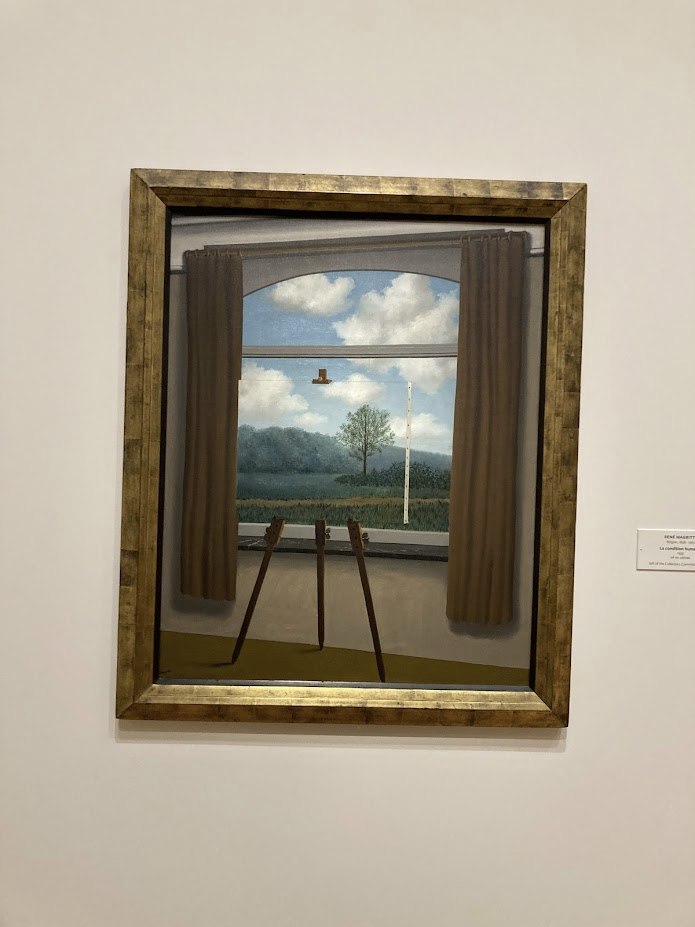
I do not mean to draw some gulf between the past and the present, as these ways in which art affects us likely connect us more than we can ever truly understand. I am simply speaking of the many revolutionary developments which have occurred over the past century. Looking back another few decades from that point, the invention of the photograph further complicated relationships to art, as while paintings had been moving closer to intentional imitations of material form, photography provided a new frontier of obfuscation and slice-taking. Where paintings were always disconnected from the material world by a visible layer, photographs dissolved that separation, allowing their audiences to forget what they were seeing was still the product of artistic choices. Photography opened this door, but the advent of the moving picture blew it fully open. Where photographs turned the momentary memory into dubiously documentary material, the moving picture allowed almost infinitely intricate dissolution of the separation between captured reality and audience. Fortunately, the inconvenient and unwieldy nature of taking and viewing both photographs and movies kept them at an arm’s length, maintaining the clear intentionality. It was impossible to mistake carefully curated portraiture for some candid representation of daily life, and though plenty of photographers would take literally candid shots, the sheer size of equipment and the prestige of viewing the results kept some degree of understanding of the intentionality of the process alive.
It took many decades for photography and film to become widespread enough to begin the slow roll of revolution into our current postmodern kaleidoscope. Once the film industry was cemented enough to pump out narrative films, and movies were affordable enough to affect large swaths of the population, life began to pattern itself after that which it saw on the silver screen. The melting of the boundary between reality and art, and the forgetting of the connection between artistic choice and final creation has likely been growing as a phenomenon for centuries, but the power of film certainly expedited their annihilation.
Eventually, photography began to become accessible to more and more people, introducing cameras into the lives of people who would rarely call themselves artists. As cameras entered many more lives, it became easier to forget their nature as tools of artistic choice. Photographs could become impartial representations of lives and people at their most candid and genuine, instead of carefully curated slices of nonexistent lives. While of course a fascinating artistic development, it became possible to forget the artistic element of that development. Video took longer to reach a similar point, and arguably did not until the advent of smartphones with HD video, but the progression of these mediums into blurred and misunderstood specters of their past existence as tools of art is what I am focusing on.
What I often think defines our postmodern relationship to art comes from these evolutions and progressions. With these previously expensive and unwieldy mediums of artistic creation becoming widely accessible, it has become almost a foregone conclusion that we do not discuss or think of these tools as artistic objects. The accessibility of these tools is of course not an issue, as the broad proliferation of tools for creation is genuinely egalitarian. Of course, the masses could never be allowed these tools alongside the prestige and allure that they were afforded in the past. While the evolution of tech on its own has contributed to these lines of progression, forcing us out of touch with artistic intentionality, none of this would have developed the same without capitalism. The genesis of this economic system alongside the technological development of photography all but ensured that by the time these tools became widely available, they would be stripped of their power. I suppose this is not an arrangement unique to capitalism, with earlier economic systems simply keeping artistic expression away from the masses, but all of these unequal societal structures make certain that artistic power and affordability are totally divorced.
The sheer pace at which we have been forced to adjust to new realities and new understandings of the world under our social media and media streaming hegemonies is cause for concern. We have always lived according to fabricated realities, whether due to the unpleasantness of the systems we have been forced to live under or some other more fundamental reason, just never at this speed. Much ink has been spilled (including some of my own) over the decay of attention spans and the clinging to children’s media that feels like it has defined Generation Z. I have come to believe it is not at all fair to blame this on us! Social media platforms and streaming services (whether for TV or all video content) have forced us to constantly reorient our understanding of reality. To swipe through TikTok, click through YouTube, or simply scroll on Instagram and see infinitely different, tonally separate slices of the world, whipping your brain around between worlds and ideas at almost breakneck speed makes the fact that we have not all experienced debilitating psychotic breaks a near-miracle. The ways in which we attempt to aim our lives at future goals depending on what art we have been exposed to gets almost fried by a simple scroll through a social media feed. While a movie or a book presents a limited view of an artist’s perspective, a few minutes of scrolling will inundate you with tens, if not hundreds of perspectives and ideas about life. This constantly shifting reality, with our goalposts and aspirations never allowed to rest, is the reality that nearly everyone lives in now. This is our postmodern world, one of realities which never settle, never rest, and never pick a lane. Some people are built for this barrage of adjustment and reorientation, while some are not. Some people have lost themselves in it, unmoored from any one reality and doomed to constantly define themselves by numbers or fleeting images. Some have managed to ride these waves or find islands to center themselves around. These streams of new realities are constant and unbearable, blinding us to the present as we are shown a million pasts. Yet we do not have any other choices. We cannot simply choose to not live in our world.
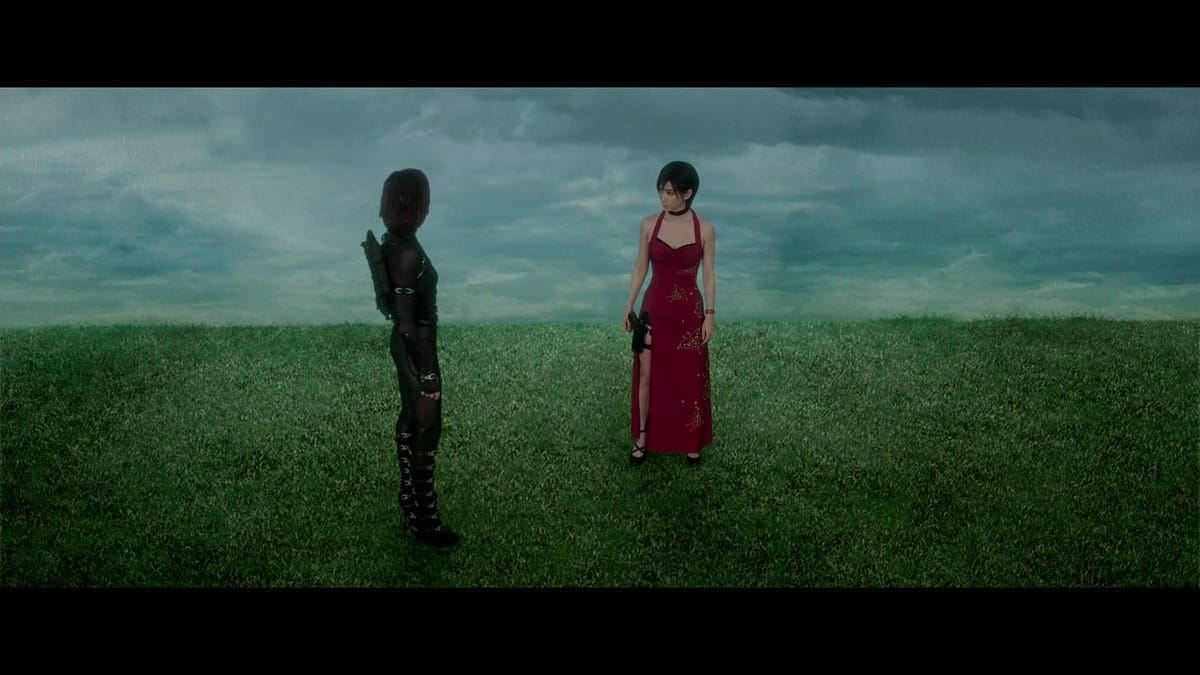
The greatest works of art that occupy our current moment are those that use this new pace and set of tools for understanding the world to implore us to stay connected to our humanity. M. Night Shyamalan’s Old (2021) dissects the cyclical attempts we make at understanding and coping with our existence and inevitable death, and how we must consciously choose to love each other and live for those connections. Lana Wachowski’s The Matrix: Resurrections (2021) dives into the messiness of personal ownership of our creations and the current landscapes of unimaginative retreads and comes away with some of the most loving cinema ever released. Paul W. S. Anderson’s Resident Evil: Retribution (2012) highlights the impersonal and barbaric nature of capitalism, and concludes that holding on to those we love is possibly the most important choice we can make in the face of this inhumanity. Jordan Peele’s Nope (2022) criticizes the film industry as a cannibalistic and monstrous industry, yet simultaneously exalts the power and importance of filmmaking. All of these films effectively harness the incomprehensibility of our current moment and reach transcendence, something which great art has always needed to do, but the works of this moment move at paces we have not encountered before. Everything moves like a phone screen now, for better and for worse.
It is possible this is all nonsense. I’m not sure whether to think about this essay as a personal manifesto on my own feelings about art or some grander attempt at a historical narrative. The former seems safer. I wish I had the answers. I have tried to navigate these unending streams of contradictory images by finding those that speak to me. While I have works that I can return to and feel seen by, I never find myself truly lost. Remembering the role of intentionality and the existence of limited horizons has also been an immense help navigating social media, as it can be far too easy to convince yourself that all of those posts which look perfect and beautiful are the whole story. No single image or video is the whole story. It would do us all well to remember the perils of forgetting the basic mechanics of a camera. Every camera crops something out.