A Reckoning with Relationships (To Art, But Also People)
Mission: Impossible - Dead Reckoning Part One, Dark Souls II, and Jacob Geller

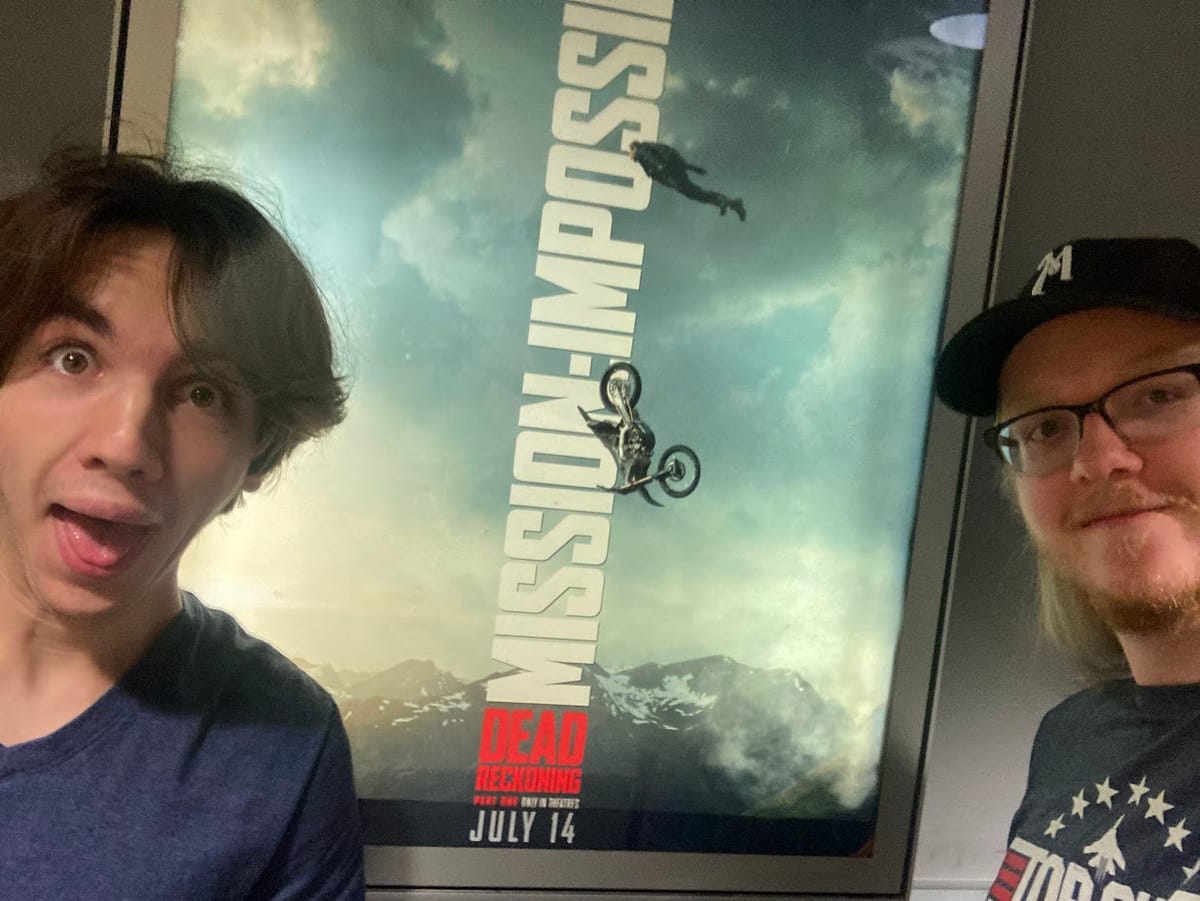
I watched the new Mission: Impossible this week. I watched it at 9pm on Wednesday, planning to go to work the next day (at noon! I was not planning to go to work on like 4 hours of sleep). I drove about 40 minutes with a friend to see it on the biggest screen possible. He had only seen the previous entry in the series, Fallout, and none of the ones before that, because our plan to rewatch the series had not worked out. I had rewatch the first, second, fourth, and fifth by myself the Sunday before, but he was not able to join me, entering Dead Reckoning with almost no knowledge of the series’ persistent arcs and motifs through the six entire movies leading up to this one. We both felt pretty good about this given McQ’s comments about this one being meant to stand alone, not asking audiences to do any homework to enjoy the experience of this single film.
My friend loved it. I walked out of the theater frustrated. My immediate reaction was extremely mixed, with much of the movie working flawlessly and better than nearly anything that has or will come out this year (or most other years), but significant portions did not work for me. Fortunately for my identity as a massive Tom Cruise and M:I fan, I have warmed up to it a ton as I have read others’ thoughts about it and mulled it over in my head. The frustrations and annoyances have faded as I have thought about the forthcoming second part and let everything slide into place in my memory. Many of my issues with it can also be chalked up to difficulties shooting during the height of COVID, which does not lessen them as issues, but does reorient their role in the finished film and allow me to think differently about them. A lot rests on the second part, but I also will almost certainly see this about 3 more times in theaters (BECAUSE IT WILL ACTUALLY STAY IN THEM FOR MONTHS INSTEAD OF GOING TO VOD A FEW WEEKS AFTER ITS DEBUT), so anyone slightly interested in me or great movies, let’s go see it!
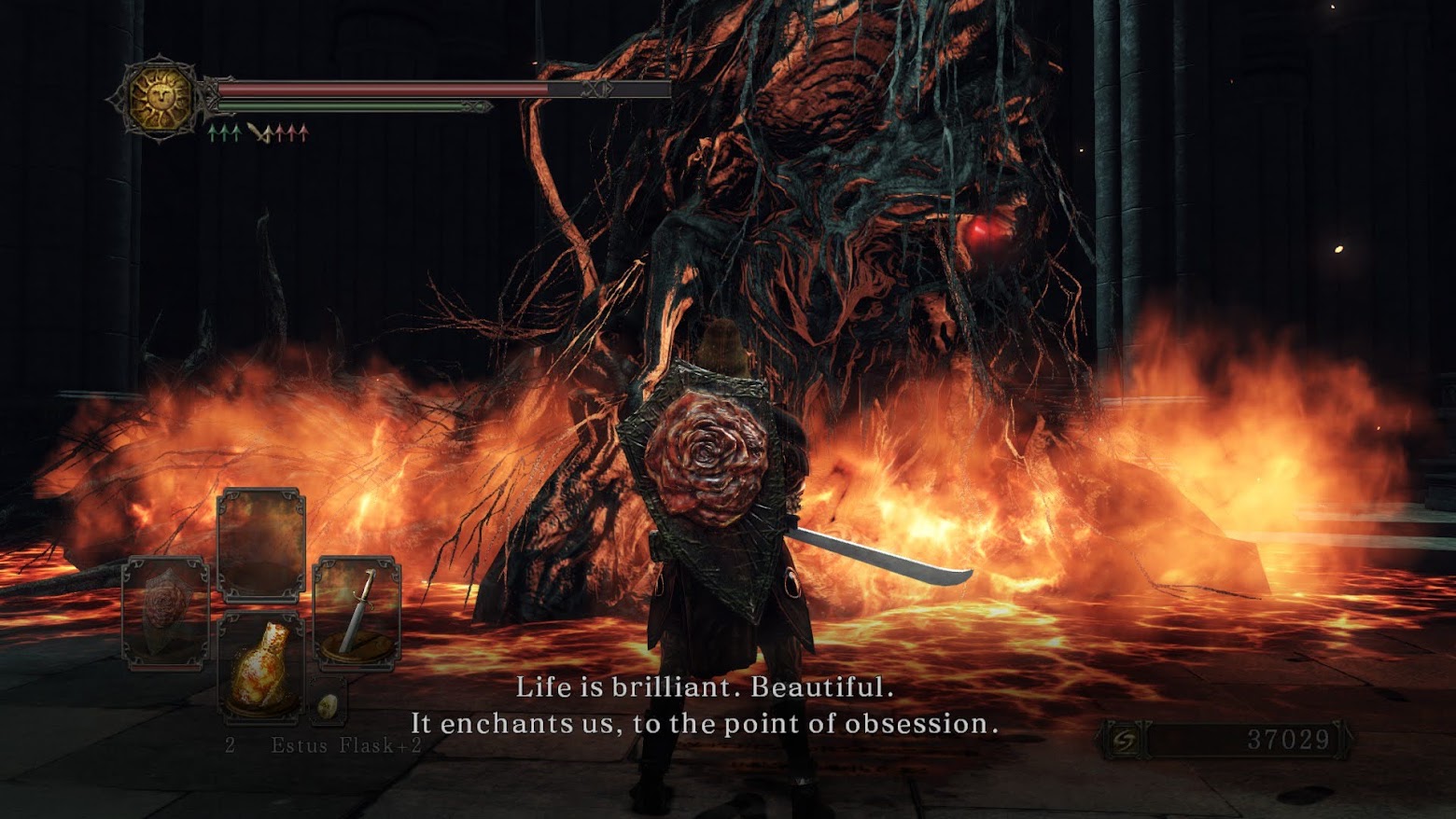
I’ve played a lot of Dark Souls II this week. Most FromSoft fans despise Dark Souls II, largely for its genuinely punishing health mechanics and splitting of typically unified stats to reduce the pace of power progression. I have only played Dark Souls III and about 30 hours of Elden Ring, but DSII easily clears both of them in my eyes. The bizarre and genuinely daring narrative and design choices present make it such an engaging and interesting work to engage with, placing it alongside games like Pathologic as true exemplars of the potential for games as art. I am a glutton for hostile art (a complete nonsense and almost unavoidably incorrect term, but let me elaborate), and the second Dark Souls game is far more powerful on this front than the third or Elden Ring. Where abstract art prompts questions of what art is, Dark Souls II similarly probes the edges of what can be present in a game of the production value and scale of a FromSoftware title. Where Dark Souls III pathetically panders to the least interesting and dumbest video game players by building an entire game around hollow nostalgia and a dearth of radical artistic choices, Dark Souls II provides truly resonant metacommentary on the arc of a player-character in an RPG and by extension, every person’s place in the world. I like it a lot!
Jacob Geller gave a talk at a public library in Durham, NC that he has uploaded to Nebula (a great platform! go subscribe!), that prompted me to consider the connections between my thoughts about the new Mission: Impossible and Dark Souls II. Geller is consistently fantastic at prompting me to draw lines across mediums in his own explorations of connections between games and other forms of art. I don’t have some cogent angle to write about here, but I do think that the arc of my opinion of the new Tom Cruise Hayley Atwell vehicle connects to Dark Souls II. Questions of what is worth pushing through, what elements of a work are necessary to its overall impact, and how to reconcile our own shifting and changing opinions have all been brought up to me by both of these works.
Shakespeare’s plays often contain scenes or even entire acts which are not particularly interesting in their own right. Sections of the drama whose value rests not in themselves, but in their contribution to the arcs and ideas present in the entire work once it is finished. Not every work of art contains these necessary lulls, though at the same time, everything does. Nothing will have a true impact if it operates only at one wavelength or frequency, and even if it does, its impact can be understood as persisting past the work’s boundaries, bringing the surrounding moments or setting into the fold of the work itself. A color field painting of a single color does not work in a total vacuum, where the viewer has no experiences or knowledge outside of the work, but it works phenomenally in a museum gallery or simply within the context of the audience’s life.
The only real “conclusion” I can approximate here is rejecting prescriptive, limiting, and narrow critical lenses. Star ratings, numerical scales, binaries, and whatever else is frequently used to swiftly communicate opinion at the cost of nuance must never be allowed to fully dominate conversations. Go talk to someone about your favorite works of art. Share them with the world. Try not to think only one thing about a work. Be nuanced. Good criticism is rooted in love, so go talk to someone you love about your critical thoughts.